Corrosion Detection Through Insulation
MAXWELL PECT U11 uses Pulsed Eddy Current technology to inspect ferromagnetic steel without requiring direct contact with the steel surface.
The probe generates a magnetic field that induces eddy currents within the steel component. The decay of these eddy currents is analysed to estimate the average remaining steel thickness within the probe footprint.
This allows inspectors to screen equipment through insulation, coatings and other suitable materials without removing the complete insulation system.
Key benefits
-
Inspection without removing the complete insulation system
-
No direct contact with the steel surface
-
No liquid couplant required
-
Rapid screening of large areas
-
Identification of general wall thinning
-
Prioritisation of areas for follow-up inspection
-
Reduced insulation removal and reinstatement costs
-
Improved maintenance and inspection planning
PECT is primarily a screening and corrosion-mapping method. It measures the average steel thickness within the probe footprint and is not intended to replace local ultrasonic testing for the precise sizing of small pits or highly localised corrosion.
Corrosion Under Insulation — CUI Inspection
Corrosion Under Insulation is a major integrity concern in refineries, petrochemical plants, power stations, offshore facilities and other process industries.
MAXWELL PECT U11 can be used to screen:
-
Insulated carbon steel pipework
-
Process piping
-
Pressure vessels
-
Storage tanks
-
Columns and similar equipment
-
Fireproofed or coated steel components
-
Areas where insulation removal is difficult or expensive
The system helps detect general metal loss and changes in average wall thickness while allowing inspection teams to focus additional testing on the most critical areas.
Encoder-Assisted Corrosion Mapping
An optional single-axis position encoder can be attached to the standard S, M, L and XL probes.
The encoder links each measurement to the probe position, enabling structured data collection and colour-coded thickness mapping.
The system supports three data-collection methods:
-
Point-by-point measurements using manual triggering
-
Dynamic scanning while the probe is moving
-
Stop-and-Go measurements triggered when the probe becomes stationary
Collected data can be displayed using colour coding and exported to customisable Microsoft Excel reports. This makes changes in average wall thickness easier to evaluate across the inspected area.
Measurement Performance
Steel wall thickness range
The system is designed for steel wall thicknesses from:
2 mm to 65 mm
Maximum lift-off range
The maximum distance between the probe and steel surface depends on the steel wall thickness.
| Steel wall thickness |
Maximum lift-off |
| Up to 15 mm |
250 mm |
| More than 15 mm up to 30 mm |
200 mm |
| More than 30 mm up to 65 mm |
100 mm |
The maximum 250 mm lift-off should therefore not be presented as applicable to every wall thickness.
Typical measurement accuracy
MAXWELL PECT measures the average steel thickness within the probe footprint with a typical accuracy of:
±10%
Probe footprint
The footprint diameter is approximately:
1.5 times the insulation thickness, with a minimum diameter of 25 mm
As the distance between the probe and steel increases, the area represented by each measurement also becomes larger.
Typical Data-Collection Speed
Measurement time depends on steel thickness, vibration, inspection conditions and selected parameters.
| Steel wall thickness |
Typical time per reading |
| More than 3 mm up to 12 mm |
0.5 seconds |
| More than 12 mm up to 25 mm |
1 second |
| More than 25 mm up to 50 mm |
2 seconds |
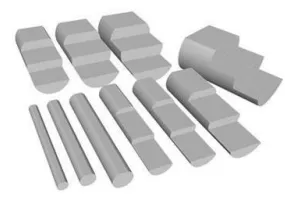
Four Standard PECT Probes
The standard system includes four probes designed for different lift-off ranges.
| Probe |
Description |
Nominal lift-off range |
| S |
Small |
0–20 mm |
| M |
Medium |
25–75 mm |
| L |
Large |
40–125 mm |
| XL |
Extra Large |
75–250 mm |
During inspection setup, the software uses test measurements to assist with probe selection and automatically configure suitable measurement parameters.
Insulation and Cladding Materials
The system can be used through suitable insulation materials and non-magnetic materials between the probe and the carbon steel surface.
The technical documentation identifies aluminium and stainless steel insulation sheeting as supported applications.
Performance through galvanised or other magnetic sheeting depends on the specific magnetic properties of the cladding and should be assessed for each application.
Portable Field Design
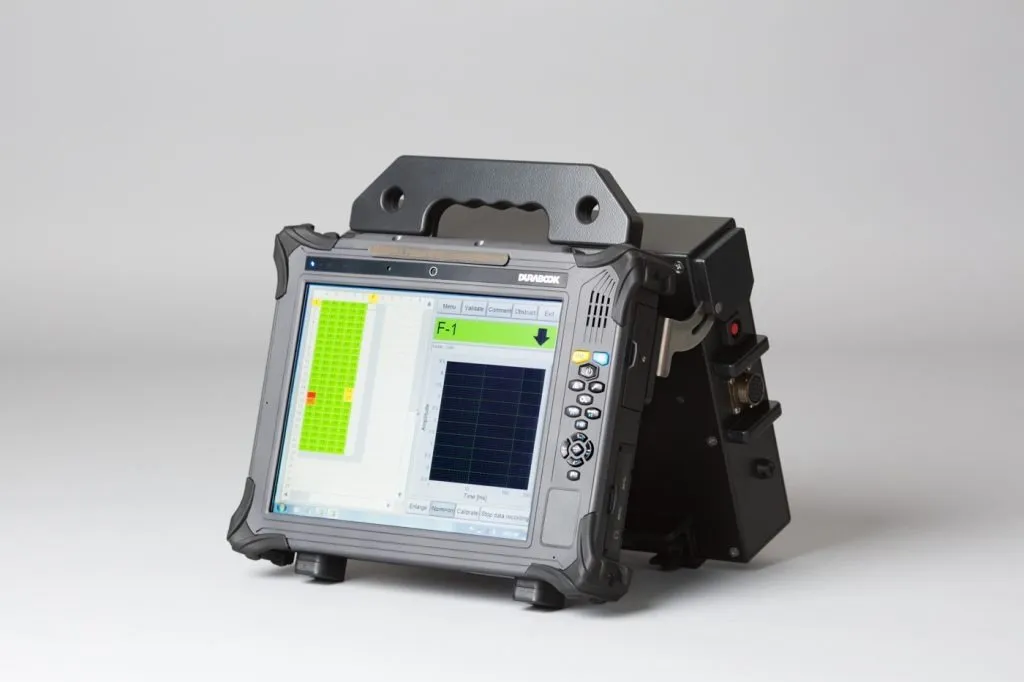
The data acquisition system is permanently connected to a Durabook U11i touchscreen computer.
Portable system features
-
Integrated touchscreen operation
-
Sunlight-readable display
-
8 GB memory
-
250 GB SSD
-
Wi-Fi connectivity
-
Bluetooth connectivity
-
USB 3.0
-
Remote control through VNC
-
Instrument weight with batteries: approximately 7.5 kg
-
Field transport by a single operator
-
Backpack and instrument carrier belt
-
Protective transport cases for road and air transport
The backpack and carrier belt support hands-free transportation. The inspection itself still requires the operator to handle and position the probe.
Battery Performance
The main batteries provide a typical operating time of approximately:
8 hours
The batteries are hot-swappable, allowing replacement without shutting down the instrument. External chargers help reduce downtime during extended field operations.
The tablet battery is automatically recharged from the main system battery when its charge level becomes low.
Reporting and Analysis Software
MAXWELL PECT U11 provides comprehensive software functions for data collection, analysis and reporting.
Software capabilities
-
Graphical user interface
-
Automatic analysis option
-
Automatic probe and parameter selection
-
Storage of complete PECT signals
-
Export of raw signals to Microsoft Excel
-
Direct Microsoft Excel reporting
-
Customisable report layouts
-
Colour-coded measurement results
-
Multilingual software menus
-
PC-based analysis software
-
Windows 10 and Windows 11 compatibility
-
Unlimited licence-free copies of the analysis software
-
Password-protected advanced parameter settings
Reports can be generated from both the instrument software and the PC-based analysis software.
Environmental and Field Specifications
MAXWELL PECT U11 is designed for industrial field use.
| Specification |
Value |
| Protection rating |
IP65 |
| Environmental resistance |
Salt and fog resistant |
| Operating temperature |
-20°C to +40°C |
| Relative humidity |
Below 93% |
| Atmospheric pressure |
70–105 kPa |
| Compliance |
CE, RoHS and FCC Part 15B |
These characteristics make the system suitable for use in refineries, petrochemical plants, power-generation facilities and offshore environments.
Standard System Configuration
A standard MAXWELL PECT U11 system includes:
-
PECT data acquisition and pulse-generation unit
-
Integrated Durabook U11i touchscreen computer
-
S, M, L and XL standard probes
-
Probe protection shoes and wear pieces
-
Two vibration-suppression shims
-
Two 8-metre signal cables
-
Two main PECT batteries
-
External battery charger
-
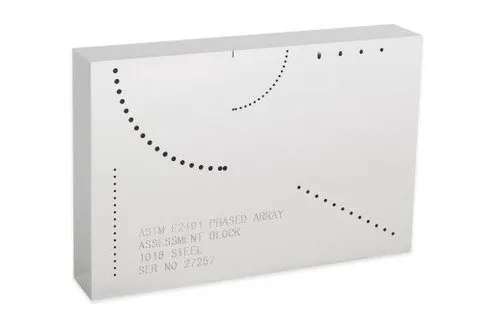
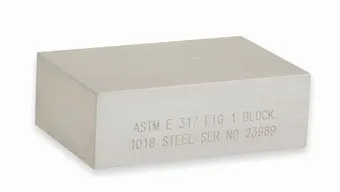
Reference plate for functional checks and calibration support
-
Transport and field-carrying equipment
Optional accessories
-
Single-axis position encoder
-
Flat probe for annular ring inspection of atmospheric storage tanks
-
Splash-zone probe rated to 50 metres water depth
-
Underwater probe rated to 2,500 metres
-
Extended signal cables
-
Underwater umbilical cables
-
Telescopic extension pole
-
Custom-designed probes
Main Applications
-
Corrosion Under Insulation inspection
-
CUI screening
-
Corrosion mapping through insulation
-
Insulated pipeline inspection
-
Carbon steel wall-thickness screening
-
Process piping inspection
-
Pressure-vessel inspection
-
Storage-tank inspection
-
Annular ring inspection
-
Corrosion Under Fireproofing inspection
-
Splash-zone inspection
-
Offshore inspection
-
Refinery inspection
-
Petrochemical plant inspection
-
Power-generation facility inspection
Please contact with us to receive quotation for PEC solutions