
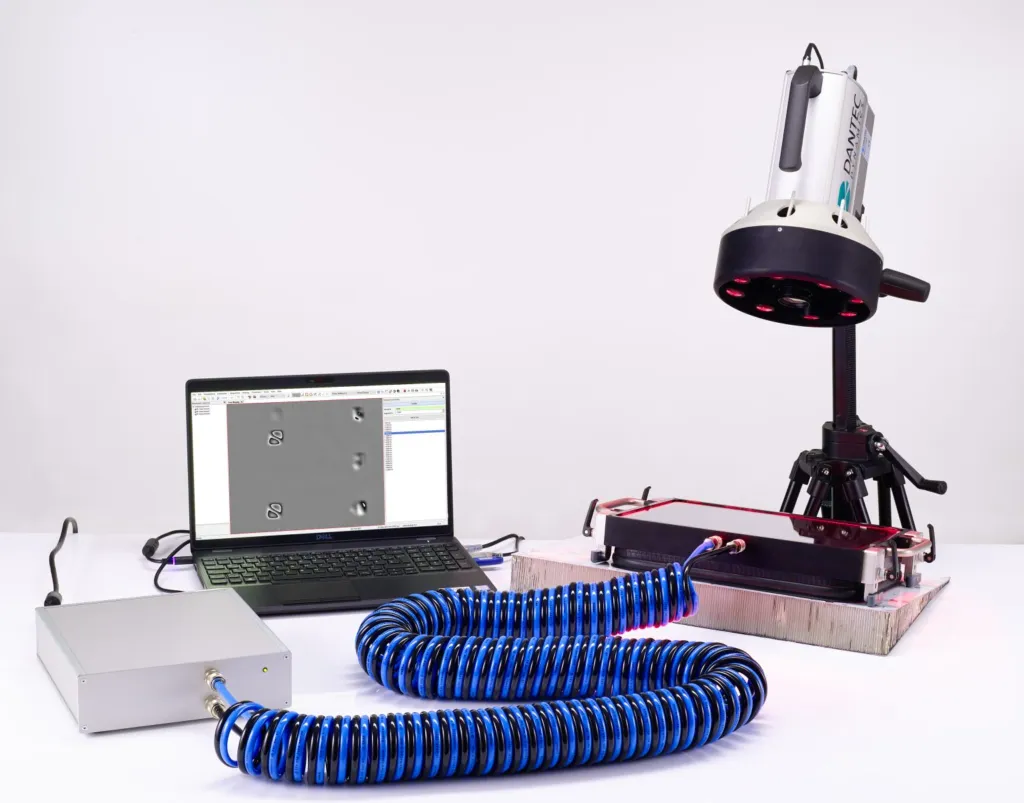
Shearography Thermal and Vacuum Excitation Systems (Dantec)
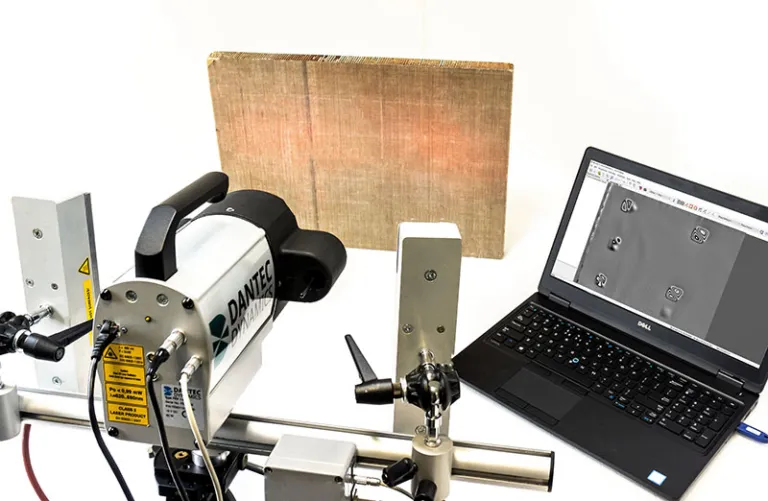
Thermal (heat lamp) and vacuum (partial) excitation systems for the FlawExplorer and FlawScout sensors: the right loading method for your part and defects.
Online Catalog ↗ Not sure this is the right one? Find it in 3 questions →In laser shearography a defect becomes visible because of a small, controlled load applied to the part. Sound material responds evenly, while an area with a delamination, disbond or crushed core bends differently and appears as fringes in the phase map. Dantec Dynamics offers two main excitation methods for the FlawExplorer and FlawScout sensors: thermal excitation and vacuum (partial) excitation. FlawHunter has vacuum excitation built in.
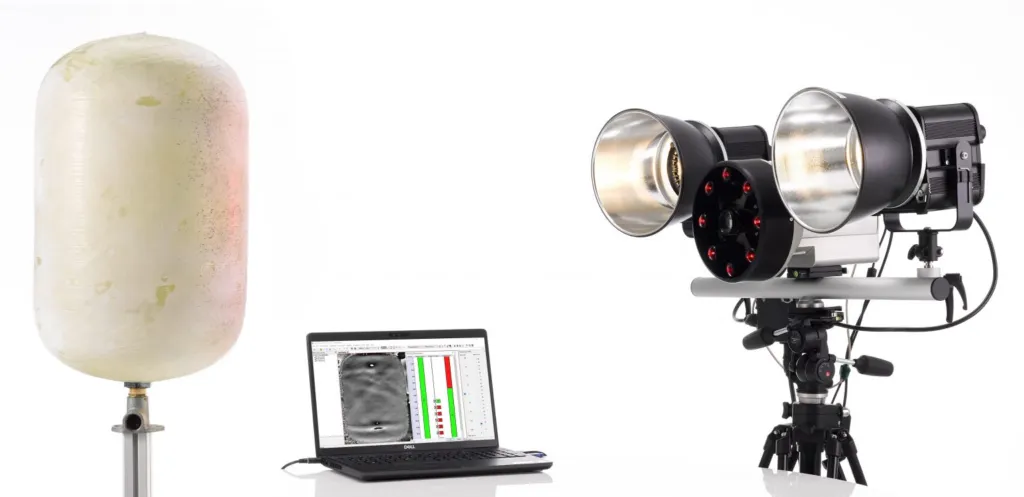
Thermal excitation
Heat lamps briefly warm the surface; as the temperature rises the surface expands. A defect below the surface changes heat flow and mechanical behaviour, so that area deforms differently from its surroundings.
- Best for: delaminations in laminates, ply wrinkling in overwraps, coating and bond separations, fully non-contact inspection of large areas
- Options: short-wave halogen and medium-wave heaters, chosen by material and thickness
- Advantage: never touches the part; integrates easily into robotic and automated cells
Vacuum (partial) excitation
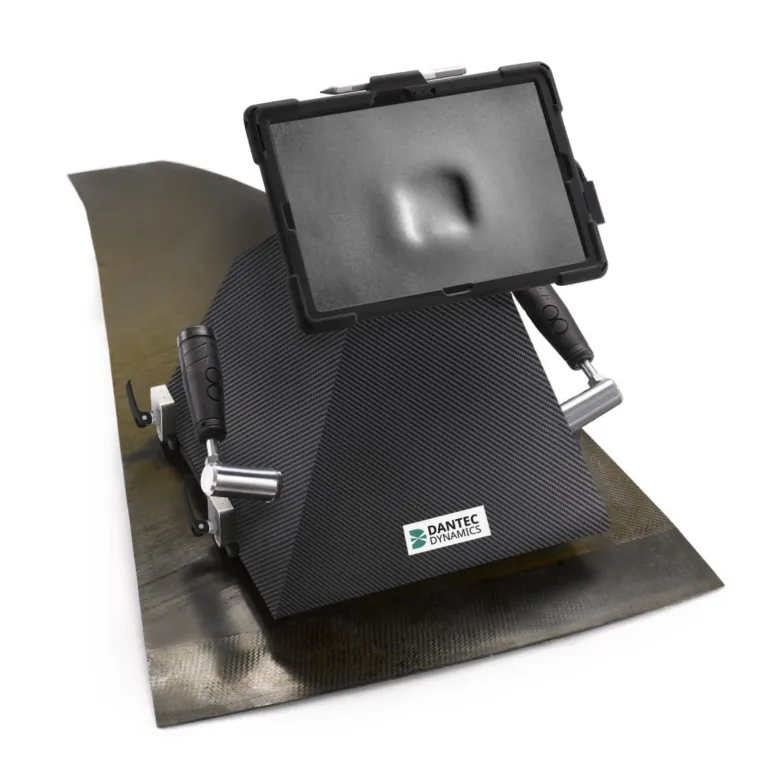
The pressure of the air trapped between the surface and a vacuum hood frame is lowered. Unbonded or weak areas bulge slightly outwards and show clearly in the phase map.
- Best for: disbonds, kissing bonds, crushed cores and node bond splits in honeycombs and sandwiches; vertical and overhead surfaces
- Options: manual vacuum hood; automatic recording procedure for repeatable measurements
- Advantage: precisely controlled loading; practical in the field and in line maintenance
Which excitation should I choose?
It depends on the material, structure and size of the part and the defects you are looking for. As a rule, thermal for laminates and overwraps and vacuum for honeycombs and sandwiches. Many users run both on the same sensor. Let us decide together with a feasibility study on your sample part: contact.
Sensor options: FlawExplorer, FlawScout and FlawHunter with integrated vacuum. All products: laser shearography systems.
Tell us about your inspection needs — we will choose the right solution together.
Çekmeköy / İstanbul +90 216 235 15 31 info@nexsen.com.tr Message us on WhatsApp →